
Reviewed · PRIENE, MILETUS & DIDYMA DAY TRIPS
Priene, Miletus, and Didyma Day Tour from Kusadasi
Didyma’s enormous Temple of Apollo is the star here, but the real appeal is the trio: three ancient Ionian sites in one day, each with a different feel. You move from Priene’s hillside ruins to Miletus’s grand theater and then to the oracle sanctuary at Didyma.
I like the small minibus format, which keeps the day more personal than a large coach tour. I also like that guides such as Gul, Mehmet, and Melike have been praised for making the ancient sites clear and enjoyable. The main caution is the fee information: the tour details say all entrance fees are included, yet another section says they are not, so confirm this before paying.
Key points to know before booking
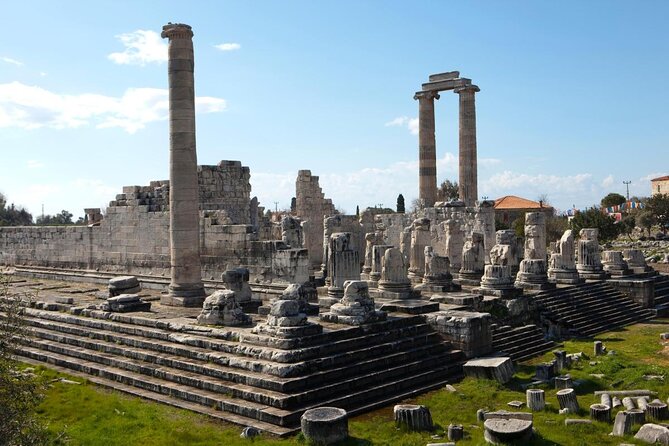
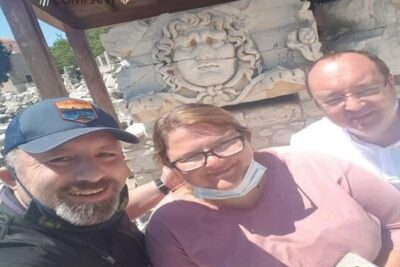
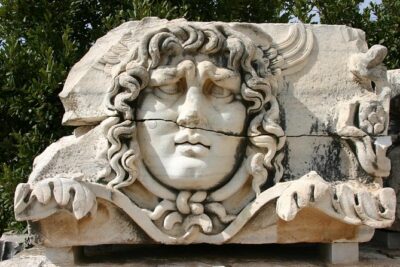
- Didyma’s Temple of Apollo is the visual highlight, with huge columns, a stepped platform, and a carved Medusa head.
- Miletus rewards curious visitors, especially if you want ancient Greek science, philosophy, trade, and city planning beyond the better-known ruins at Ephesus.
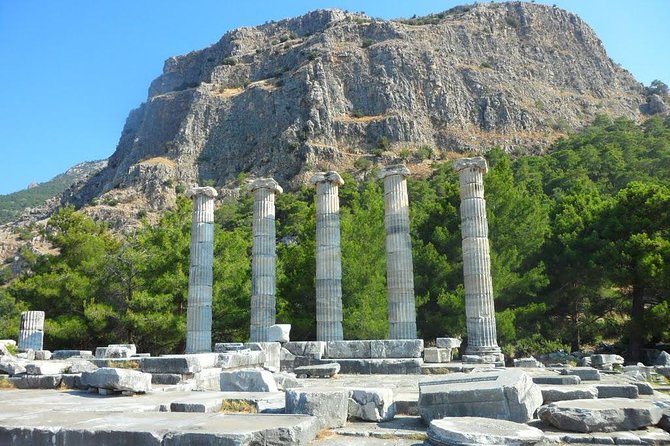
- Priene has the best setting, between Samsun Mountain and the old Maeander River flood plain, with views across cotton fields.
- The group is capped at 14 people, a useful middle ground between a private tour and a crowded coach.
- Lunch, hotel pickup, and return transport are included, though drinks are extra.
- The tour lasts about eight hours, with roughly three hours assigned to Didyma, three to Miletus, and one to Priene, plus driving time.
Why this makes a good Ephesus alternative
If you have already seen Ephesus, this day tour gives you a different view of the ancient Aegean world. Ephesus is the grand crowd-pleaser, with its famous Library of Celsus and long marble streets. Priene, Miletus, and Didyma feel less polished and less crowded, but they offer a broader lesson in how Greek cities worked, worshiped, traded, and thought.
You will visit three sites tied to the Ionian world. That matters because Ionia was not just a collection of old ruins. Its cities helped shape Greek writing, mathematics, philosophy, architecture, coins, and long-distance trade.
The day begins with pickup around 9 a.m. from a Kusadasi or Selçuk-area hotel, or from the port in Kusadasi. You travel by minibus with an English-speaking art historian. The group limit of 14 gives the guide room to answer questions and adjust explanations, while still keeping the price below that of a private vehicle.
At $216.74 per person, this is not a budget sightseeing outing. The price makes more sense if you value an art historian, door-to-door transport, lunch, and three separate archaeological sites. You are also covering a long day of driving that would be awkward to arrange by public transport. Just settle the entrance-fee question before booking, since the supplied details conflict on that point.
More Priene, Miletus and Didyma circuits:
- Ephesus, Priene, Miletos and Didyma Tour
★ 4.9 · 21 reviews - Priene Miletos Didyma Tour From Kusadasi / Selcuk Hotels
★ 5.0 · 15 reviews - NO HIDDEN FEES : Private Ephesus – Miletus – Didyma
★ 5.0 · 13 reviews
Priene: a hillside city with a grand view
Priene is the shortest stop, listed at about one hour, but it may be the most atmospheric. The city sits north of Miletus and south of Ephesus, on the slopes below Samsun Mountain. From the ruins, you can look across the Maeander River flood plain toward cotton plantations stretching to the Aegean.
The setting helps you understand the city’s past. Priene once had access to the sea and belonged to the Ionian group of 12 allied cities. Over time, the river deposited silt and changed the shoreline. Today, the open view gives you a strong sense of how geography could reshape a port city.
The Temple of Athena is the main architectural prize. It sits high on the hill, where the position adds drama to the remaining columns and stones. You will also see the Hellenistic theater, noted for its five special seats in the front row and its capacity of about 6,500 people.
Priene’s theater is especially interesting because it was not rebuilt by the Romans in the way many ancient theaters were. That gives its design a more distinctly Hellenistic character. The site is also known for good acoustics, though your guide will need to explain or demonstrate this within the time available.
The city’s domestic remains add another layer. Priene was prosperous enough that many homes had private bathrooms and toilets. The figure given for private bathrooms is about one third of the population, a striking reminder that urban comfort was not limited to temples and public buildings.
The drawback is time. One hour passes quickly in a hilly archaeological site, and the terrain may require walking over uneven ground. If Priene is your main interest, a longer private visit would let you study the residential blocks and temple area at a slower pace. On this tour, treat it as a compact introduction with a superb view.
Miletus: the city of thinkers, ships, and theaters
Miletus receives about three hours, and that longer visit is justified. It was one of the leading cities of the Ionian League and, before 500 BCE, one of the greatest Greek cities in the east.
The city’s location helped make it powerful. Miletus once commanded a major port on the Maeander River, giving ships access to the Mediterranean, the Black Sea, and the Sea of Marmara. The river later silted up, leaving the ancient city inland. That change is one reason the ruins can feel surprising: you are visiting a former maritime power without seeing the harbor as it once appeared.
Miletus also offers a strong intellectual story. Thales, Anaximander, Anaximenes, and Hecataeus are linked with the city. They asked questions about nature, the heavens, geography, and the basic substance of the world. Their work helped shift Greek thought toward observation and argument rather than myth alone.
Your guide may also explain the city’s role in early coin production. Miletus was part of a wider commercial network, and its location made it a natural outlet for goods from inland Anatolia. The city’s importance came from both ideas and trade.
The ruins to look for include:
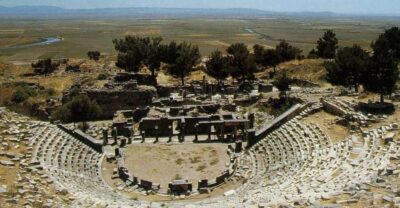
- The large ancient theater
- The Byzantine fortress
- Harbor monuments
- The Delphinium
- The South Agora
- The Baths of Faustina
- The Mosque of Ilyas Bey
- The caravanserai
This mix is one of Miletus’s strengths. You are not seeing one isolated monument. You are moving through layers of Greek, Roman, Byzantine, Islamic, and later Anatolian history.
The theater is likely to be the easiest feature to grasp at a glance. It gives you a sense of the scale of public life in Miletus, while the agora and baths show how commerce and daily routines filled the spaces between major events. The Baths of Faustina connect the city with Roman imperial culture. The later mosque and caravanserai remind you that the site remained part of lived regional history after the classical period.
Miletus is less immediately tidy than Ephesus. Grass, broken walls, and scattered stones may require more imagination. That is also its charm. You get more from this stop if you listen closely to the guide and keep asking how the city functioned, rather than simply looking for the best-preserved facade.
Didyma: Apollo, prophecy, and monumental scale
Didyma is listed as a three-hour stop, making it the longest single visit. The site was not a normal city in its main ancient role. It was a sanctuary, linked to Miletus by the Sacred Way. Pilgrims traveled along that route to seek answers from the oracle of Apollo.
The name Didyma means the twins, referring to Apollo and Artemis, the children of Zeus and Leto. The first Greek temple was built here in the late eighth century BCE. The remains you see today belong mainly to later construction, with the earlier archaic temple buried beneath the Hellenistic structure.
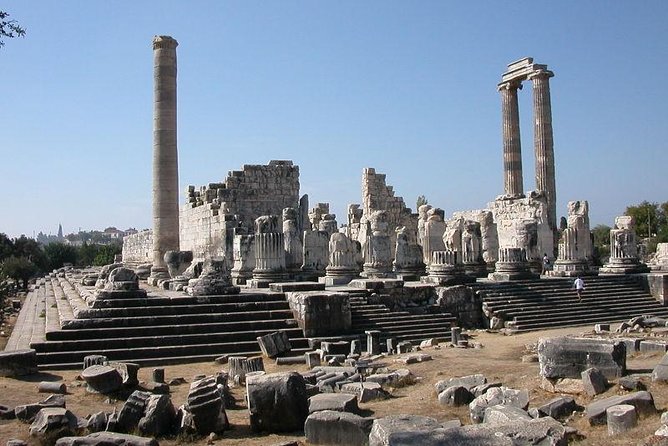
The Temple of Apollo is huge even in ruin. Its great stepped base, tall surviving columns, and broad open space make it easy to picture the ambition of the builders. A carved Medusa head adds a memorable detail, especially for visitors who enjoy sculpture as much as architecture.
The oracle gives the site its human drama. Ancient people did not come only to admire a building. They arrived with difficult questions and hoped Apollo, through his priests, would provide guidance. Your guide can help connect the impressive stones with that practical purpose.
Didyma is located near the modern seaside village of Didim. The setting gives the final stop a different mood from the inland ruins at Priene and Miletus. You get a major sanctuary, a village atmosphere, and a glimpse of how an ancient religious center can remain tied to a living place.
Three hours should allow a fuller look, but the site is still exposed and open. Bring water, especially since drinks are not included in the tour price. Comfortable shoes will help at all three locations, but most of all at Priene and around the uneven stone surfaces at Didyma.
Same coastline, a completely different sort of day:
- FOR CRUISERS: Skip The Lines PRIVATE EPHESUS TOUR &On Time Return
★ 5.0 · 8,527 reviews - Top Choice For Cruisers: Ephesus, Mary’s House WITH TICKETS+LUNCH
★ 5.0 · 7,233 reviews - PRIVATE EPHESUS TOUR FOR CRUISERS: On-time Return and Skip-Line
★ 5.0 · 5,807 reviews - PRIVATE NO HIDDEN FEES Ephesus, Mary’s House Guided Tour /GRP OPT
★ 5.0 · 2,455 reviews
A small group makes the guide matter
The tour is limited to 14 people and uses a minibus. That setup is important because these sites need explanation. A broken column rarely tells you why a city mattered, how a port disappeared, or why an oracle drew pilgrims from far away.
Past departures have included guides named Gul, Mehmet, and Melike. Gul was praised for giving a great deal of useful information, while Mehmet was described as personable and willing to take the group to a local restaurant for lunch. Melike was noted for her pleasant manner and clear information. Your guide may be someone else, but these examples show the kind of experience to expect from a good departure: interpretation, conversation, and help making sense of scattered ruins.
One especially useful point is that the tour has gone ahead with only two people. The stated maximum is 14, not a promise of a full group. A very small departure can make the day feel almost private, though you should not assume that this will happen every time.
The art historian qualification is a real benefit here. You are not simply being driven between photo stops. The best explanations will link buildings to politics, religion, commerce, and ideas. At Miletus, ask about the Ionian League and the city’s famous thinkers. At Didyma, ask how the oracle worked and how the Sacred Way connected the sanctuary to Miletus. At Priene, ask how the changing coastline affected the city.
Lunch, timing, and what the price covers
A buffet lunch is included, and one guide has taken a group to a local restaurant. That combination suggests a practical midday break rather than a long gourmet meal. It gives you time to eat without arranging a restaurant yourself, which matters on a tightly timed eight-hour excursion.
Drinks are not included, so budget for them separately. A vegetarian option is available if you request it when booking.
Pickup and drop-off are included from hotels in Kusadasi and the surrounding Selçuk area, as well as from the Kusadasi port. This is helpful if you are staying in town or arriving by cruise ship. The 9 a.m. start gives the day a clear rhythm, though the return time will depend on traffic, site time, and the distance between locations.
The entrance-fee information needs special attention. The highlights and main description say all entrance fees are included, while the exclusions section says entrance fees are not included. That is a meaningful difference at this price. Ask Apasas Travel to confirm the current arrangement in writing before booking.
Free cancellation is available up to 24 hours before the start time. Changes or cancellations inside that window are not refunded, and the tour requires a minimum number of participants. If the minimum is not met, you are offered another date or experience, or a full refund.
Who should book this day out?
I would choose this tour if you have already visited Ephesus, enjoy ancient Greek sites, or want more context than a self-guided ruin visit usually provides. It suits people who like a full day with several stops and who would rather leave the driving to someone else.
It is also a good fit for cruise passengers using Kusadasi port, provided the timing works with your ship schedule. Hotel pickup and return simplify the day, and the small group should feel less rigid than a large coach outing.
You may want a different plan if you dislike long site visits, uneven ground, or a schedule that gives only one hour to Priene. A private tour would offer more control over pacing and could let you spend longer at the place you value most. You should also skip this one if Ephesus is still at the top of your list and you have not yet visited it, since this tour is best understood as an alternative rather than a replacement.
Should you book the Priene, Miletus, and Didyma tour?
Book it if you want three distinct ancient sites in one organized day, especially after Ephesus. The strongest reasons are the personal minibus format, the art historian guide, the excellent range of sites, and the chance to see Didyma’s huge Apollo sanctuary without arranging complicated transport.
The price is high enough that the included services matter. Confirm the entrance-fee policy, request a vegetarian lunch in advance if needed, and wear practical shoes. If those details suit you, this is a thoughtful choice for seeing the Ionian coast beyond its most famous ruin.
FAQ
Where does the tour depart from?
Pickup is offered from all hotels in Kusadasi and from the port in Kusadasi. Pickup is also available from hotels in the Selçuk area.
What time does the tour start?
The stated start time is 9:00 a.m.
How long does the tour last?
The tour lasts approximately eight hours.
How many people can join the group?
The activity has a maximum of 14 travelers and uses a small minibus.
Is lunch included?
Yes. A buffet lunch is included. Drinks are not included, and a vegetarian option is available if requested when booking.
Are entrance fees included?
The tour information gives conflicting details. The main description says all entrance fees are included, while the exclusions section says they are not. Confirm this point with Apasas Travel before booking.
Can I cancel for a full refund?
Yes, if you cancel at least 24 hours before the experience start time. Cancellations or changes made less than 24 hours in advance are not refunded.
Just added around Kusadasi
- Quick-Ephesus Private Tour★ 5.0 · 10 reviews
- ONLY FOR CRUISE GUESTS / Top Seller Ephesus Tour★ 5.0 · 9 reviews
- For Cruisers : Private Ephesus Tour With Local Tour Guide★ 5.0 · 8 reviews
- Private Tour : Ephesus Port Tour for Cruisers★ 5.0 · 4 reviews
- Private Pamukkale and Ephesus Tours★ 4.5 · 3 reviews
- Private Tour of Ephesus,House of Mother Mary &Artemis Temple from Izmir★ 5.0 · 4 reviews
- For Cruise Guests : Best of Ephesus Private Tour / Kusadasi Tours★ 5.0 · 6 reviews
- FOR CRUISE GUESTS : Ephesus Private Tour / ON TIME RETURN TO SHIP★ 5.0 · 13 reviews
Priene, Miletus & Didyma Day Trips, compared.
Priene Miletos Didyma Tour From Kusadasi / Selcuk Hotels
Read our review →
Kusadasi Shore Excursion: Private Full-Day Tour to Ephesus, Didyma and Miletus
Read our review →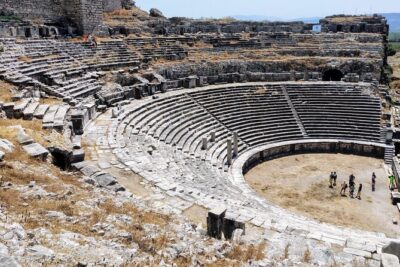
Private Full-Day Ephesus Tour with Miletus and Didyma for Cruise Guests
Read our review →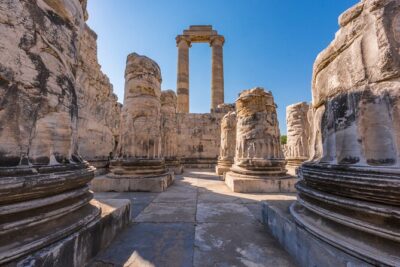
Priene Miletos Didyma (PMD) Tour From Kusadasi Port / Hotels
Read our review →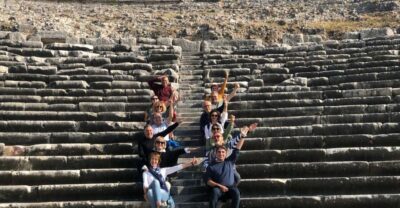
Private Ephesus Miletus Dydima Tour from Port Kusadasi
Read our review →Browse the lists this tour appears in