Reviewed · EPHESUS TOURS FROM KUSADASI
Private Full Day Ephesus Tour from Bodrum
Ephesus is the prize here: a vast ancient city where marble streets lead past the Library of Celsus, a 25,000-seat theatre, Roman homes, and temples. The private Mercedes Vito, hotel or port pickup, and personal guide make this a far easier day than arranging the long journey yourself. I especially like the flexible pace and the chance to add the peaceful House of Mary and St. John’s Basilica.
I also like the strong guides assigned to this tour, including Selim, Bano, Ulas, Nur, Eylem, Salim, Tas, and Melahat. The main concern is distance: Bodrum to Ephesus takes about two hours in ideal conditions, and some journeys have taken closer to three. Add paid admissions, lunch, and possible shopping stops, and this is a full, costly day.
Key points to know before booking
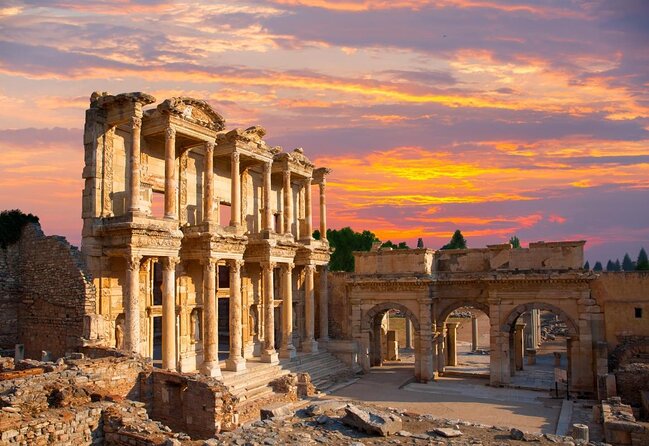
- Ephesus is the main event: You see the Library of Celsus, Great Theatre, Temple of Hadrian, Terrace Houses, Odeion, and more.
- The drive is long: Plan on roughly four hours of driving in good conditions, with traffic and weather able to add time.
- Private touring gives you control: Only your group takes part, so you can ask questions and set a comfortable walking pace.
- Two important religious sites are included in the route: The House of Mary and Basilica of St. John add Christian history to the ancient Greek and Roman setting.
- The headline price is not the final price: Ephesus costs €40 per person, the House of Mary costs €18, and lunch is listed at $15.
- Shopping may appear in the day: Past tours have included carpet, leather, ceramic, coffee, and candy stops. Make your preferences clear before setting off.
Why Ephesus is worth the long ride from Bodrum
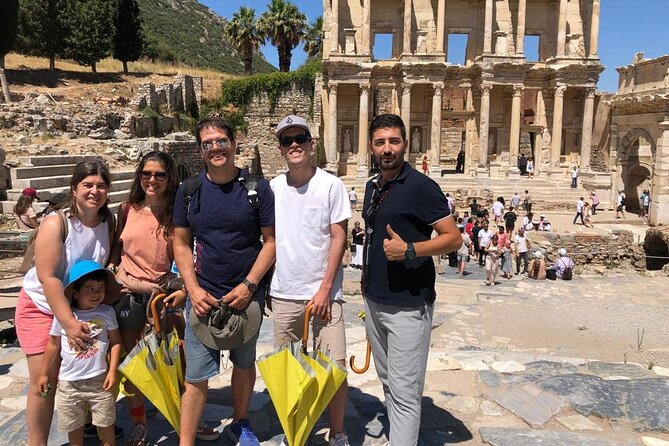
Ephesus is not a quick ruin stop. It was a major city shaped by Greek, Roman, Byzantine, and Christian life, and its remains still give you a strong sense of how a large ancient urban center worked.
You walk along streets once used by residents, officials, merchants, worshippers, and theatre crowds. The best-known structures are impressive, but smaller details matter too: water systems, public meeting halls, private homes, paved roads, and the way the city used hills and terraces.
The tour is most useful for cruise passengers and Bodrum visitors who want to see Ephesus without changing hotels or arranging several separate transfers. The tradeoff is time. You can spend four or more hours on the road, so this is not an easygoing local outing.
The stated tour length is six to eight hours, but the drive can make the day longer in real conditions. One journey took two hours and 25 minutes each way, while another was described as closer to three hours. If you are returning to a cruise ship, give yourself a serious time cushion.
More ways to see Ephesus:
- FOR CRUISERS: Skip The Lines PRIVATE EPHESUS TOUR &On Time Return
★ 5.0 · 8,527 reviews - Top Choice For Cruisers: Ephesus, Mary’s House WITH TICKETS+LUNCH
★ 5.0 · 7,233 reviews - PRIVATE EPHESUS TOUR FOR CRUISERS: On-time Return and Skip-Line
★ 5.0 · 5,807 reviews
A comfortable private ride, with a practical catch
Pickup is offered from Bodrum hotels, Bodrum Cruise Port, and Bodrum Airport. Cruise passengers meet the driver at the exit gate of the immigration terminal, while hotel guests meet at reception and airport passengers meet at the domestic terminal exit.
Transportation is in a new air-conditioned Mercedes Vito with a private driver. That matters in hot weather and after several hours on uneven stone streets. The vehicle is described as spacious, and families have appreciated having room for children and older relatives.
Your English-speaking licensed guide travels with you. A private group means you can ask for more explanation at the Library of Celsus, shorten a stop that interests you less, or slow down if someone in your party needs a break. The flexible pace has been especially helpful for groups with elderly family members.
I would confirm the day’s priorities before leaving Bodrum. The route contains many archaeological stops, and the guide may also suggest a carpet workshop, leather showroom, ceramic studio, coffee stop, or candy shop. These can be interesting when you choose them, but you should say plainly if you prefer more time at the ruins.
The House of Mary on Bulbul Mountain
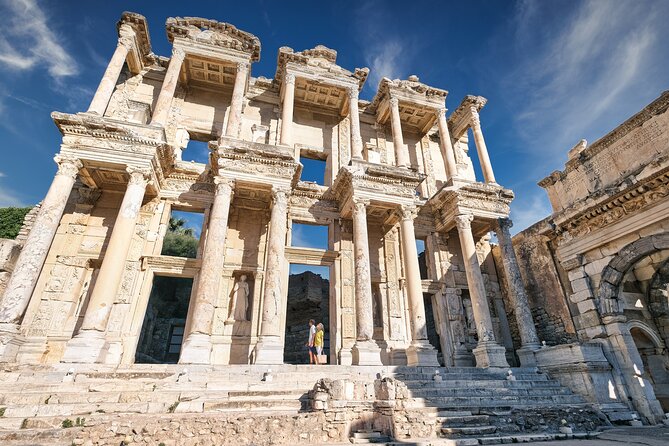
The first major stop is the House of the Virgin Mary, high on Bulbul Mountain, about nine kilometers from Ephesus. The small stone structure is traditionally regarded as the place where Mary may have spent her final years with St. John.
The setting is quiet and wooded, a sharp change from the open archaeological site below. Inside, the building combines a small chapel with rooms associated with the original house. You may see candles, prayers, and visitors pausing at the nearby spring and prayer wall.
You receive about 45 minutes here. That is enough for a calm visit, but not a long religious service or extended exploration. Admission is not included and costs €18 per person.
This stop is valuable if Christian history or pilgrimage matters to you. If your main goal is classical archaeology, you may prefer to spend more time at Ephesus itself. Since the site sits on a mountain and the day already includes substantial walking, tell your guide early if you want to skip it.
Entering the ancient city of Ephesus
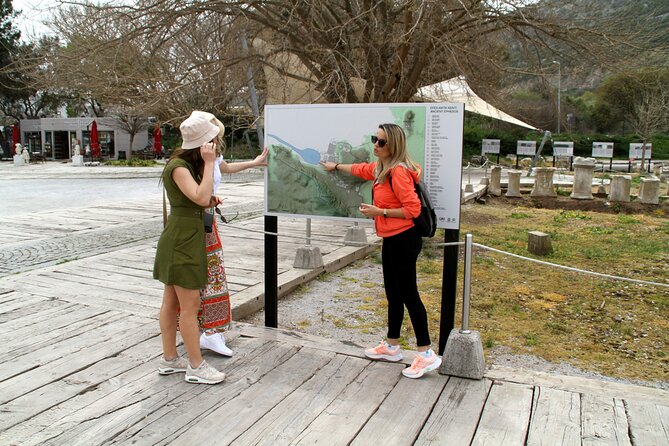
Ephesus receives the largest share of the day, with about 90 minutes listed for the main ancient city visit. In practice, your guide will connect several nearby monuments while you walk through the archaeological zone.
The city began as a Greek settlement and later became a major Roman center. Its fame rests partly on the Temple of Artemis, one of the Seven Wonders of the ancient world, but the remains you see today also reveal government, religion, entertainment, engineering, and home life.
The main Ephesus admission costs €40 per person and is not included in the tour price. A skip-the-line guarantee is included, which can be useful when cruise groups and summer visitors arrive at the same time.
Wear shoes with a firm grip. You will walk on marble and rough stone, often in strong sun. The tour requires a moderate level of fitness, and the heat can make a short archaeological walk feel much longer.
A few more Kusadasi trips worth putting side by side
- From Izmir: Full-Day Ephesus Tour with Lunch
★ 4.7 · 642 reviews - From Kusadasi: Full-Day National Park Jeep Tour with Lunch
★ 4.4 · 581 reviews - Full-day Pamukkale and Hierapolis Tour from Selcuk or Kusadasi
★ 5.0 · 209 reviews - PRIVATE Ephesus Full Day Tour from Izmir
★ 5.0 · 98 reviews
Government at the State Agora and Odeion
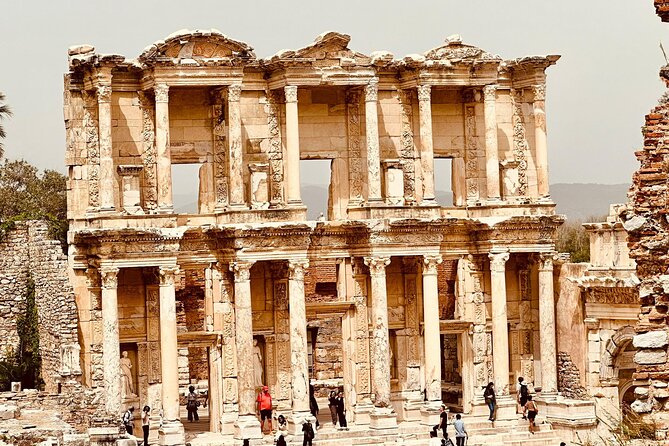
The State Agora sits near the Basilica and dates mainly from the Roman period. Unlike a commercial market, it was used for government business and public discussion. That distinction helps you understand Ephesus as an organized city, not simply a collection of grand monuments.
The site also reveals earlier layers. Excavations found ancient graves, an archaic sarcophagus, and a paved road in the area. A water reservoir nearby formed part of the city’s supply system, with water brought through the Pollio Aqueduct.
You spend about 15 minutes here. That is enough for a good explanation from a strong guide, but not enough for a long archaeological lecture. I would ask your guide to point out how the water system supported the city, since infrastructure is easy to miss beside the famous temples.
The Odeion takes another 15 minutes. This small theatre held about 1,500 people and served two purposes. It was a concert hall and the meeting place of the Boule, one of Ephesus’s governing councils.
The larger theatre hosted public assemblies, while the Odeion handled the city’s smaller governing body. Look at the seating, stage area, and orchestra, then picture a building that once had a wooden roof.
Temples, gates, and the marble street
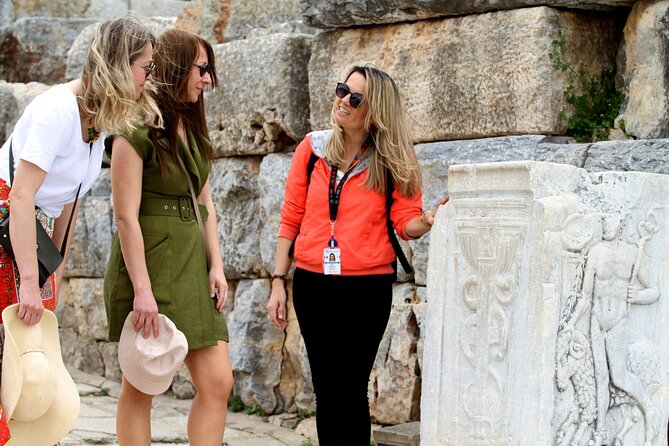
The Temple of Domitian is the first known imperial temple at Ephesus. It once sat on a large raised terrace, and the remaining foundations help show the scale of the original building.
The Temple of Hadrian is more intact and more decorative. Its four Corinthian columns and curved arch make it one of the most photogenic structures along Curetes Street. The temple honored Emperor Hadrian after his visit to the city in 128 AD.
The tour allows about 15 minutes at each temple. That is brief, but the monuments are close together. A good guide can use the short stops to explain Roman power, emperor worship, and the political importance of monumental architecture.
At Hercules Gate, only the sides of the gate remain. Reliefs of Hercules gave the structure its modern name, and its narrow opening once limited vehicle access. By the fourth century, Curetes Street had become a pedestrian area.
This is a small detail with real value. The gate tells you that Ephesus was not frozen in one period. The city changed over time, and its streets were adapted as traffic, commerce, and public life shifted.
The Terrace Houses reveal private Roman life
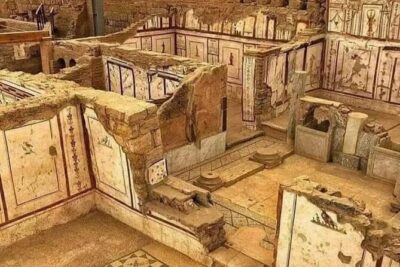
The Terrace Houses are one of the most rewarding additions to the day, especially if you have seen many ancient public monuments. Located opposite the Temple of Hadrian, these homes belonged to wealthy Roman families.
The houses occupy three terraces on the lower slope of Bulbul Mountain. The oldest structure dates to the first century BC, and the residences continued in use until the seventh century AD.
Protective roofing now covers the excavated buildings. Inside, you can see preserved mosaics and frescoes, along with the layout of rooms and passageways. These remains offer a closer look at domestic life than the grand streets and theatres do.
About 30 minutes is allowed here. Admission is not included, so confirm the current fee with the operator if you want to enter. For many people, this is where Ephesus becomes personal. You are no longer looking only at public power. You are seeing how families arranged their homes, decorated their floors, and lived within the city.
The Library of Celsus and Great Theatre
The Library of Celsus is the visual centerpiece of Ephesus. Built in 117 AD, it was also a monumental tomb for Gaius Julius Celsus Polemaeanus, a governor of the province of Asia.
The library held more than 12,000 scrolls. Double walls helped protect the manuscripts from temperature and humidity, an early example of careful storage for fragile written material.
The statues and columns on the facade are striking, but your guide should also explain what happened behind the display. The building was not simply a handsome entrance. It functioned as a serious center for learning and remembrance.
The Great Theatre is larger still, with a reported capacity of 25,000. Its first construction dates to the Hellenistic period, while the Romans enlarged it into the form you see today.
This was not only a place for plays and music. It hosted religious gatherings, political meetings, philosophical discussion, gladiator contests, and animal fights. Christian tradition also connects the theatre with preaching by St. Paul.
You receive about 15 minutes at the theatre, which is enough to grasp its scale but may feel short if you want photographs from several angles. If the theatre and library are your top priorities, tell your guide. A private tour gives you a better chance of shaping the time around those sites.
St. John’s Basilica and the Temple of Artemis
The Basilica of St. John sits on the southern slope of Ayasuluk Hill. Tradition holds that St. John spent his final years near Ephesus and was buried here. A small chapel was built over the grave in the fourth century, and Emperor Justinian later ordered a large basilica.
The stop lasts about 30 minutes. It adds a later Christian layer to a day otherwise focused on Greek and Roman monuments. From the hill, you also gain a wider view of the area around Selçuk and Ephesus.
The final stop is the Temple of Artemis, free to enter and allotted about 25 minutes. You should set expectations carefully. This was once one of the Seven Wonders of the ancient world, but only foundations and a few reconstructed elements remain on the original site.
The temple stood on ground that later became marshy. Many of the finest surviving pieces are now in the British Museum, so the stop is more about understanding the temple’s former scale and importance than seeing a complete building.
Lunch, shopping, and the real cost
The listed price is $259 per person. That includes the private vehicle and driver, hotel or port pickup and drop-off, English-speaking licensed guide, parking, taxes, and skip-the-line service.
You must add €40 for Ephesus and €18 for the House of Mary. Lunch is listed at $15 per person. That puts the known cost well above the headline figure, even before currency conversion.
For a private group, the value depends on your starting point and priorities. If you are in Bodrum for a short stay or arriving by cruise ship, having transport, parking, and a guide arranged can justify the price. If you are comfortable organizing a long transfer yourself, the per-person cost may feel high.
Group discounts may help larger parties. Since the tour is private, families and friends can also split the cost of the vehicle and guide across more people.
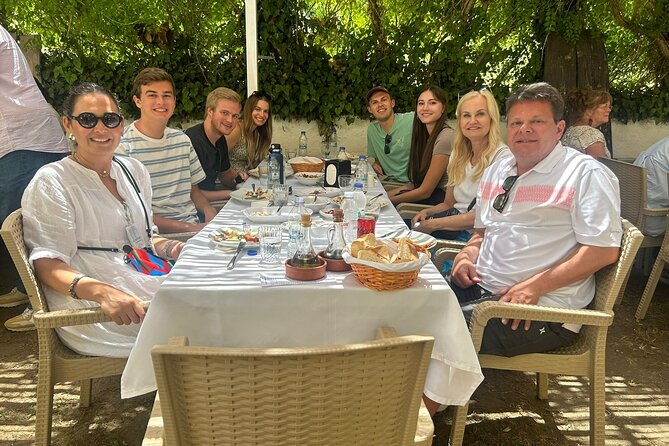
Lunch is described as local and plentiful, with some parties especially enjoying the restaurant selected by guides such as Nur. Shopping stops have included carpet weaving, leather, ceramics, Turkish coffee, and handmade candy. They may add local interest, but buying should never be treated as part of the tour requirement. If you do not want shopping, say so at the start.
Who should book this Bodrum to Ephesus day?
I would choose this tour if you want a private guide, need pickup from a Bodrum hotel or cruise port, and care more about seeing Ephesus than keeping the day relaxed.
It suits families, small groups, first-time visitors, history fans, and people who want the House of Mary and St. John’s Basilica included in one long outing. The private format is also useful when one person walks more slowly or when your group wants to ask many questions.
I would hesitate if you have a strict cruise schedule, dislike long drives, or want to spend most of the day at one archaeological site. A delayed departure, traffic, or a long return journey can leave little room for extra stops. Cruise passengers should provide the ship name, docking time, disembarkation time, and re-boarding time when booking, then confirm the return plan again.
Free cancellation is available up to 24 hours before the start time. After that point, the amount paid is not refunded and changes are not accepted.
Should you book it?
Book this tour if Ephesus is high on your Turkey wish list and you value a private vehicle, a flexible guide, and door-to-door service from Bodrum. The Library of Celsus, Terrace Houses, Great Theatre, and House of Mary make a powerful day.
Before paying, add the admission fees, ask how much time you will have at Ephesus, and state your position on shopping stops. Most important, treat the two-hour drive as a best-case estimate, not a promise. If you can accept the distance and the extra cost, this is one of the more practical ways to reach Ephesus from Bodrum.
FAQ
How long does the tour last?
The tour is listed as approximately six to eight hours. The drive from Bodrum to Ephesus is stated as about two hours each way, though traffic and weather can make it longer.
Is the tour private?
Yes. Only your group participates in the tour.
Where can pickup take place?
Pickup is offered from Bodrum hotels, Bodrum Cruise Port, and Bodrum Airport. Hotel guests meet at reception, cruise passengers meet at the immigration terminal exit, and airport passengers meet at the domestic terminal exit.
Is admission to Ephesus included?
No. Admission to Ephesus is listed at €40 per person and must be paid separately.
Is the House of the Virgin Mary included?
The House of Mary is included as a planned stop, but its admission ticket is not included. The listed fee is €18 per person.
Is lunch included?
No. Local lunch is listed as an additional $15 per person.
What language is the tour offered in?
The tour is offered in English with an English-speaking professional licensed guide.
Can I cancel the tour?
You can cancel for a full refund up to 24 hours before the experience start time. Cancellations or changes made less than 24 hours before the start time are not accepted for a refund.
Just added around Kusadasi
- Quick-Ephesus Private Tour★ 5.0 · 10 reviews
- ONLY FOR CRUISE GUESTS / Top Seller Ephesus Tour★ 5.0 · 9 reviews
- Private Pamukkale and Ephesus Tours★ 4.5 · 3 reviews
- For Cruisers : Private Ephesus Tour With Local Tour Guide★ 5.0 · 8 reviews
- Private Tour : Ephesus Port Tour for Cruisers★ 5.0 · 4 reviews
- Private Tour of Ephesus,House of Mother Mary &Artemis Temple from Izmir★ 5.0 · 4 reviews
- For Cruise Guests : Best of Ephesus Private Tour / Kusadasi Tours★ 5.0 · 6 reviews
- FOR CRUISE GUESTS : Ephesus Private Tour / ON TIME RETURN TO SHIP★ 5.0 · 13 reviews
Ephesus Tours from Kusadasi, compared.
FOR CRUISERS: Skip The Lines PRIVATE EPHESUS TOUR &On Time Return
Read our review →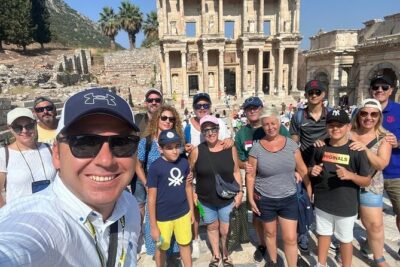
Top Choice For Cruisers: Ephesus, Mary’s House WITH TICKETS+LUNCH
Read our review →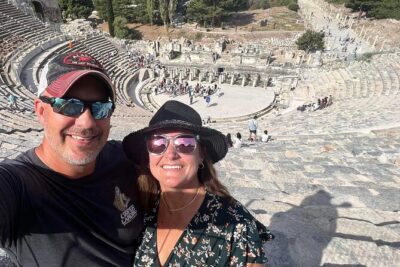
PRIVATE EPHESUS TOUR FOR CRUISERS: On-time Return and Skip-Line
Read our review →
For Ship Guests:BEST SELLER EPHESUS PRIVATE TOUR & On Time Return
Read our review →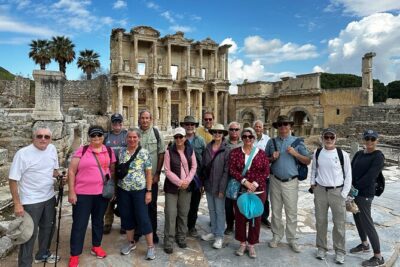
ALL INCLUDED: Ephesus Ruins, Mary’s House Tour incl ENTRY TICKETS
Read our review →
Ephesus Temple of Artemis and House of Mary Private Half Day Tour
Read our review →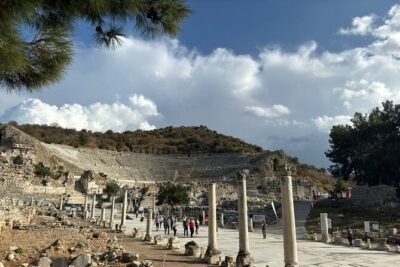
PRIVATE TOUR FOR CRUISERS: Mary’s House (Meryemana) and Ephesus
Read our review →